Pool Tile Calcium Removal in Palm Beach Gardens
October 21, 2026
Read more
How South Florida rain, heat, and sun throw off pool water chemistry in West Palm Beach, and how to keep it balanced.
Pool water chemistry in West Palm Beach never seems to sit still for long. A pool that tests perfectly on Monday can turn cloudy by Thursday after a few afternoon storms. Then the sun comes back out and burns through whatever chlorine is left.
At Blue Bubbles Pools Leak Detection & Repair, we balance water for homeowners across West Palm Beach, Palm Beach Gardens, and Wellington. South Florida weather is the biggest reason pool chemistry drifts here. Once you understand how rain and heat affect your water, keeping it clear gets much easier.
This guide covers the readings that matter, how our climate changes them, and when it makes sense to bring in a pro.
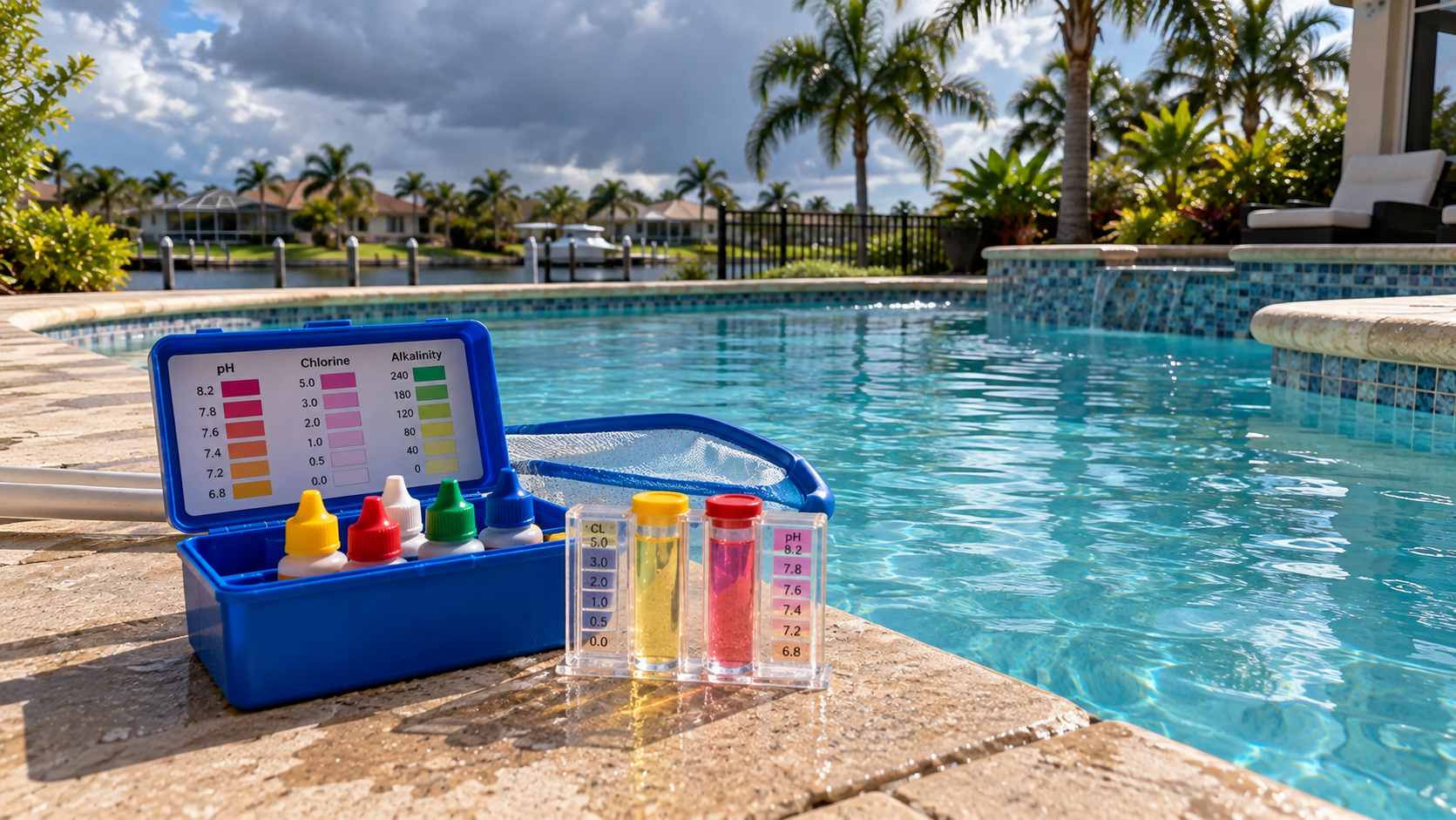
Balanced water depends on a handful of numbers working together. Here are the main ones and the ranges commonly recommended for residential pools:
These numbers affect each other. For example, low alkalinity lets pH swing wildly, and high pH makes chlorine far less effective. That's why fixing one reading in isolation often creates a new problem.
The right targets can vary by pool type, especially for saltwater pools. Your service provider can fine tune them for your specific setup.
From late spring into fall, afternoon storms roll through Palm Beach County almost daily. Each one changes your pool in a few ways.
Heavy rain adds fresh water fast. That dilutes chlorine, alkalinity, calcium, and stabilizer all at once. A pool that was balanced before a storm can end up low across the board.
Storms wash leaves, dirt, and lawn runoff into the water. That organic material uses up chlorine and feeds algae. As a result, green tints often show up a day or two after a big rain.
Rainwater can push pH and alkalinity around, especially in pools that were already near the edge of their range. Testing after a heavy storm helps you catch the drift before it turns into cloudy water.
Rain is only half the story. On clear days, the South Florida sun creates a different set of problems.
Sunlight breaks down unprotected chlorine quickly. Without enough stabilizer, a pool can lose much of its chlorine in a single sunny afternoon. That leaves the water open to algae even when you added chlorine that morning.
Algae thrives in warm water. When pool temperatures climb in summer, any gap in sanitizer gives algae a chance to take hold. Consequently, chlorine levels that work in winter may fall short in August.
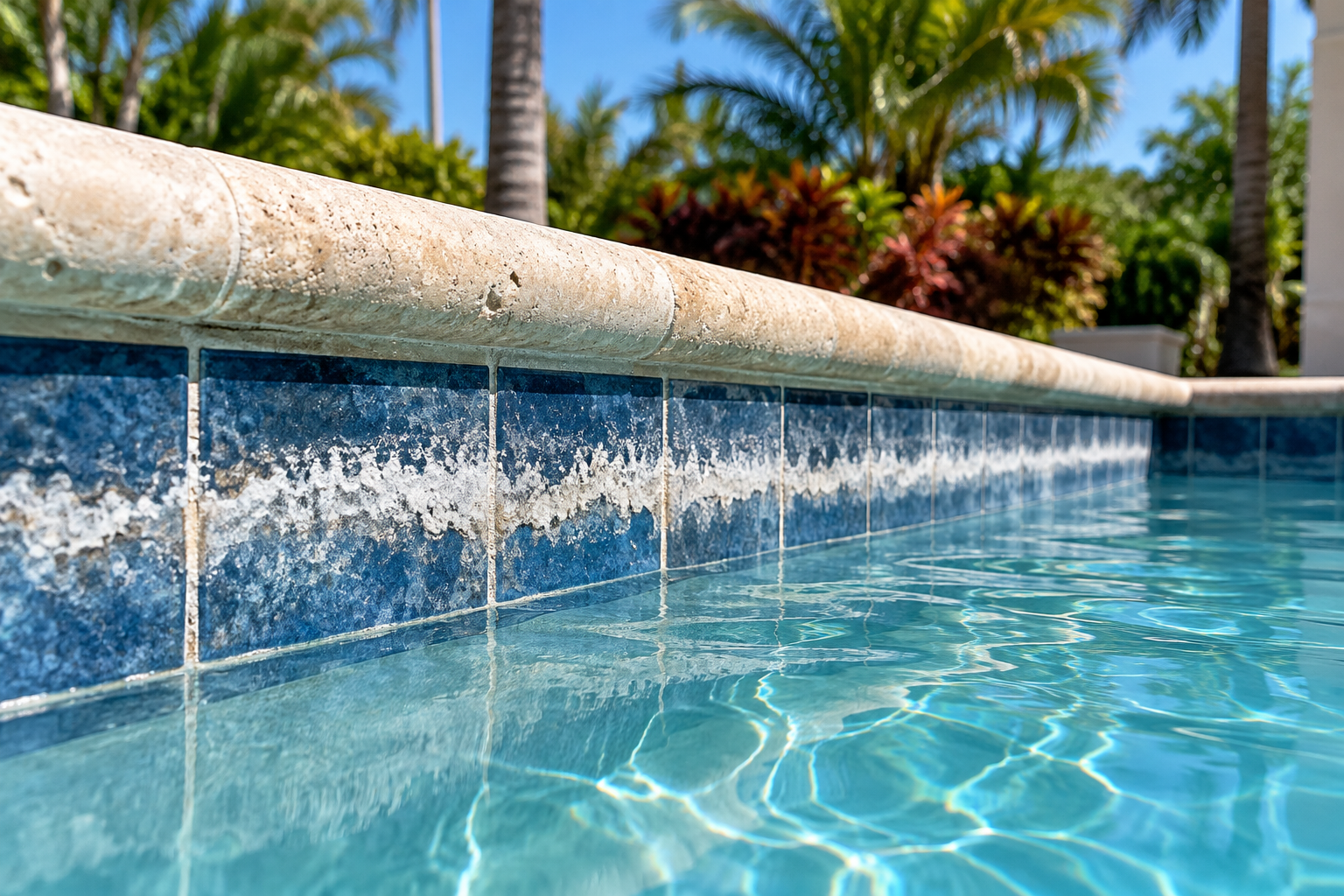
Heat also drives evaporation. As water leaves, the minerals stay behind. Over time, calcium and dissolved solids build up, which can lead to scale along the tile line and cloudy water.
Hurricane season runs from June through November, which overlaps with our wettest months. A few habits make it easier to keep your water balanced.
The goal is to catch small shifts before they become big ones. A quick adjustment the day after a storm is far easier than clearing a green pool a week later.
In South Florida, testing at least once a week is a good baseline. During rainy months or heavy use, testing two or three times a week helps you stay ahead of problems.
Here is a pattern we see often. A homeowner adds more and more chlorine to fight cloudy water, but the real problem is high pH or low stabilizer. More chemicals won't fix an imbalance; the right adjustment will.
Blue Bubbles Pools offers water chemistry balancing, so a technician can test, adjust, and explain what your pool needs.
Rain dilutes chlorine and other chemicals while washing in debris and nutrients. That combination makes it easier for algae and cloudiness to develop. Testing and adjusting soon after a storm helps prevent it.
At least once a week is a good baseline. During the rainy season or periods of heavy use, testing two or three times a week is smarter.
Strong sunlight breaks down chlorine quickly, especially when stabilizer levels are low. Warm water and heavy rain also increase chlorine demand.
Generally, no. Draining a pool low can be risky in Florida, where a high water table can push upward on an empty or nearly empty shell. Most pools are designed to handle normal rainfall.
Blue Bubbles Pools serves West Palm Beach, Palm Beach Gardens, Wellington, and nearby Palm Beach County communities. Contact the team to confirm service for your address.
South Florida weather will keep testing your pool, season after season. With the right balance and a little attention after storms, your water can stay clear year round. Consistent chemistry also protects your plaster, tile, and equipment.
Blue Bubbles Pools provides water chemistry balancing for homeowners across West Palm Beach and Palm Beach County. Book a consultation today, and let our team get your water back in balance.