Pool Water Chemistry in West Palm Beach
October 14, 2026
Read more
What causes calcium on pool tile in Palm Beach Gardens, how bead blasting compares to chemical cleaning, and how to prevent it.
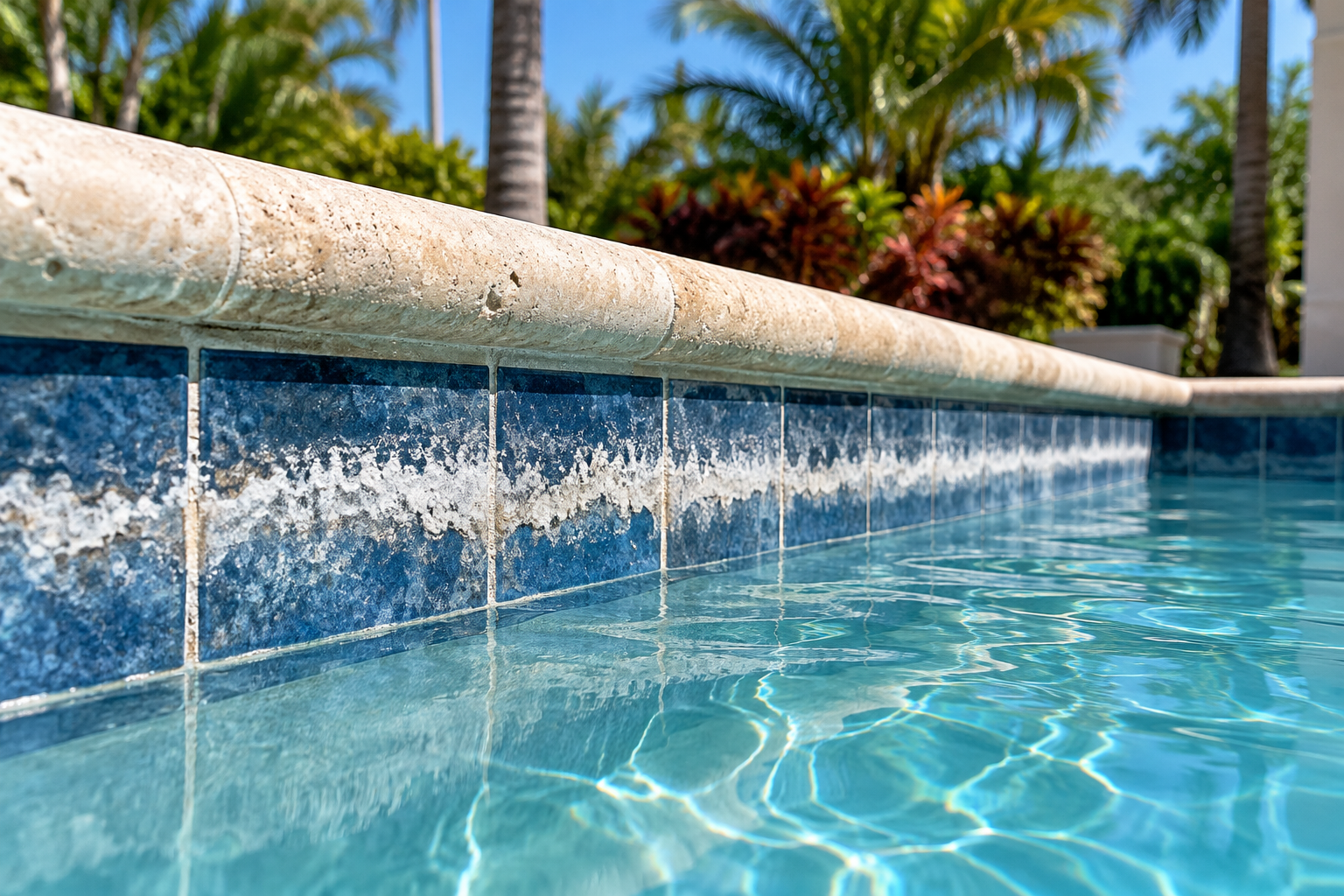
Pool tile cleaning in Palm Beach Gardens often comes down to one stubborn problem: that white, crusty line at the water's edge. It starts as a faint haze. Over a few hot months, it hardens into a rough band that brushing alone can't touch.
At Blue Bubbles Pools Leak Detection and Repair, we help homeowners across Palm Beach Gardens, West Palm Beach, and Wellington bring their tile back to life. Calcium buildup isn't just cosmetic. Left alone, it gets harder to remove and can trap dirt and algae.
This guide explains what causes calcium on pool tile, how bead blasting compares to chemical cleaning, and how to keep the buildup from coming back.
Calcium is naturally dissolved in pool water. Under the right conditions, it comes out of solution and sticks to surfaces. The waterline is where that happens most.
Water constantly splashes onto the tile and dries in the sun. Each time, it leaves a thin mineral film behind. South Florida heat speeds up evaporation, so that film builds faster here than in cooler climates. High pH and high calcium levels make it even worse.
Knowing which type you have matters, because it often decides which removal method will actually work.
For lighter buildup, hands on cleaning is often the first step. It's also the gentlest option when done carefully.
Technicians use descaling products made for pool tile, along with brushes or pumice stones where the tile allows. The chemical softens the deposit, and the scrubbing lifts it away. This works best on newer, flaky calcium carbonate.
The material matters here. Glass and some decorative tiles need softer methods than standard porcelain, so the approach should match your tile.
Bead blasting is the heavy duty option for stubborn scale. It's a common choice when chemical cleaning can't break through.
The water level is lowered just below the tile line. Then a pressurized stream of fine media, such as glass beads, is aimed at the buildup. The media knocks the calcium off without the heavy scrubbing that can scar tile. Afterward, the area is rinsed and the water is brought back up.
Technique makes a big difference. In experienced hands, bead blasting is precise. In the wrong hands, it can etch tile or wear away grout.
The right choice depends on three things: how heavy the buildup is, what type of calcium it is, and what your tile is made of.
Here is a situation we see often. A homeowner spends weekends scrubbing the tile line, but the gray band barely changes. When scrubbing stops making progress, the deposit is usually calcium silicate, and it needs a different method.
The best first step is an in person look. A technician can test a small area and recommend the approach that cleans the tile without damaging it.
Cleaning the tile is only half the job. Keeping it clean comes down to water chemistry and a few simple habits.
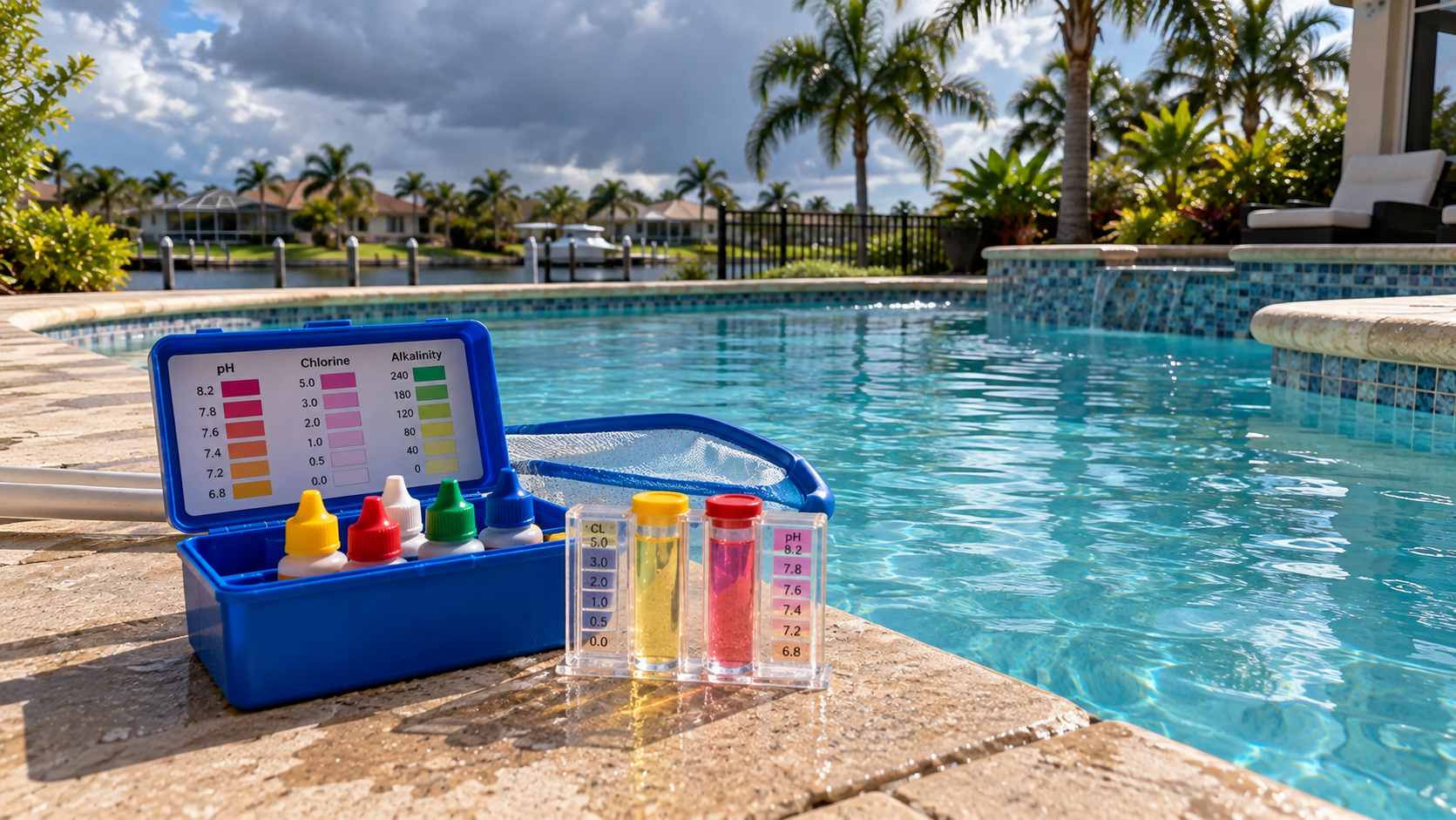
Balanced water is the single best defense against scale. That's why tile cleaning and chemistry balancing work best together. Once the tile is clean, consistent chemistry keeps it that way much longer.
It is usually calcium scale. As pool water splashes and evaporates at the waterline, it leaves minerals behind that harden over time. Heat, high pH, and high calcium levels speed up the process.
When done by an experienced technician, bead blasting is safe for most pool tile. It removes heavy scale effectively, but poor technique can damage grout or delicate tile, so skill matters.
They can remove lighter calcium carbonate deposits. Harder calcium silicate often doesn't respond well to chemicals alone and may need bead blasting.
Keep pH and calcium hardness in range, brush the tile line weekly, and keep the water level steady. Scale inhibitors can also help keep minerals dissolved.
Blue Bubbles Pools serves Palm Beach Gardens, West Palm Beach, Wellington, and nearby Palm Beach County communities. Contact the team to confirm service for your address.
Clean tile changes how the whole pool looks. Once the calcium is gone and the water stays balanced, the sparkle lasts much longer. The sooner scale is removed, the easier it is to keep it from coming back.
Blue Bubbles Pools Leak Detection and Repair provides tile and surface cleaning for homeowners across Palm Beach Gardens and Palm Beach County. Book a consultation today, and we'll recommend the right method for your tile.