How to Tell If Your Boca Raton Pool Has a Leak
August 28, 2026
Read more
Not all pool leak detection is equal. Here is why Leak Certification matters for West Palm Beach homeowners and what a real inspection looks like.
Most West Palm Beach pool owners do not call a leak specialist first. They call whoever already services their pool.
That is a reasonable instinct. Your pool service company knows your pool, has your contact information, and is already there every week. When you notice the water level dropping, asking them to take a look is the obvious first move.
The problem is that routine pool service and professional leak detection are two genuinely different skill sets. A technician who excels at keeping water chemistry balanced and equipment running smoothly is not necessarily trained to isolate a plumbing line under pressure, interpret acoustic equipment readings, or identify a hairline crack in a light niche fitting from underwater. Many pool service companies in West Palm Beach offer "leak detection" as a line item, but what that means in practice varies enormously.
Blue Bubble Pools Leak Detection & Repairs is a Leak Certified company based in West Palm Beach that has served South Florida pool owners for over 10 years. This post is about how to think clearly about pool leak detection in West Palm Beach so you make the right call from the start rather than after several weeks of water loss and inconclusive results.
The Leak Certification designation matters in the pool industry because it represents specific training in leak detection methodology, not just general pool service experience. A Leak Certified technician has been trained in pressure testing procedures, acoustic detection equipment, dye testing protocols, and underwater inspection techniques as a formal discipline.
In a market like West Palm Beach, where the combination of South Florida heat, year-round pool use, salt-air exposure near the Intracoastal, and mature pool inventory creates consistent leak activity, that certification is a practical differentiator. It means the person working your pool has been trained specifically to find leaks accurately, not just to service pools and check for leaks opportunistically.
Blue Bubble Pools carries that certification alongside 10 years of hands-on experience in Palm Beach County. That combination is what allows the company to find leaks that routine pool service visits miss.
West Palm Beach sits along the Lake Worth Lagoon and is flanked by the Intracoastal Waterway to the east. The combination of salt-influenced air, high humidity, frequent rain, and a water table that responds quickly to seasonal conditions creates an environment where pool plumbing and shell materials are under consistent stress.
A few specific factors worth understanding for West Palm Beach pool owners:
Salt air and corrosion. Homes near the Intracoastal or within a few miles of the coast see accelerated corrosion on metal pool components. Equipment pad connections, light niche fittings, and any metal hardware in the pool system degrade faster than they would in an inland market. Fittings that appear intact from above can develop micro-corrosion at the point where they meet the concrete shell.
High water table and soil movement. Palm Beach County's sandy soil shifts with moisture changes. Underground plumbing runs through this material at all angles, and the joints and fittings that connect pipe sections are subject to micro-movement over years. A fitting that was sealed correctly at installation can develop a small gap after years of seasonal soil expansion and contraction.
Year-round pool use. Unlike northern markets where pools close for winter, West Palm Beach pools run twelve months a year. That means equipment cycles continuously, water chemistry management is ongoing, and the cumulative wear on plumbing, fittings, and shell surfaces accumulates without a seasonal break. A pool in West Palm Beach reaches the same wear milestones faster than a pool in a seasonal market.
Evaporation masking losses. West Palm Beach averages over 260 sunny days per year and summer temperatures consistently in the low 90s. Evaporation from a pool in peak summer can reach a quarter inch per day or more. That level of normal water loss makes it genuinely difficult for homeowners to distinguish a small leak from evaporation without a controlled test.
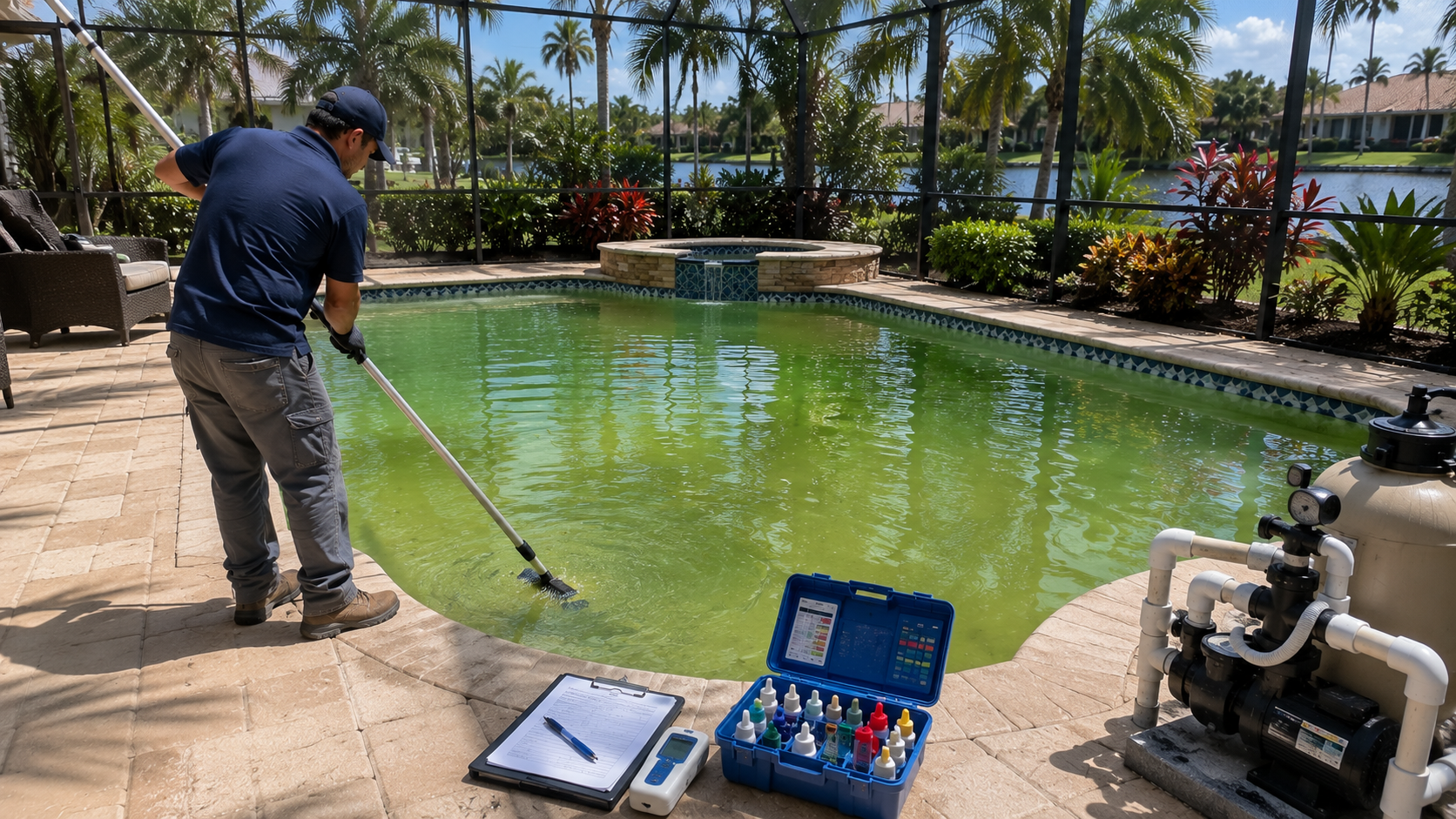
Before calling Blue Bubble or any other leak detection company, the bucket test is the first step every West Palm Beach homeowner should run. It costs nothing and takes 24 hours.
Fill a five-gallon bucket with pool water and set it on a pool step so the water level inside the bucket matches the pool water level. Mark both the bucket level and the pool level with tape or a marker. Turn off the auto-fill if you have one. Wait 24 hours without adding water or running any backwash cycles, then compare.
If the pool dropped significantly more than the bucket, you have a leak. If both dropped by roughly the same amount, the loss is evaporation rather than a structural problem.
One common mistake: running this test on a windy day. Wind increases evaporation from both the pool and the bucket, but the pool's larger surface area loses proportionally more. Run the test during calm conditions for the most reliable result.
If the bucket test confirms a leak, that is when to call Blue Bubble Pools. Showing up with that data already in hand makes the detection process more efficient and gives the technician a starting point before testing begins.
The detection process Blue Bubble Pools uses is systematic rather than speculative. Every inspection follows the same sequence regardless of what symptoms the homeowner has described.
Symptom review. The inspection starts with a conversation about what you have observed: how fast the level drops, whether the auto-fill runs constantly, whether air bubbles appear in the return jets, whether there are any soft or wet spots near the equipment pad or in the yard. Each symptom is a data point that narrows the starting point before testing begins.
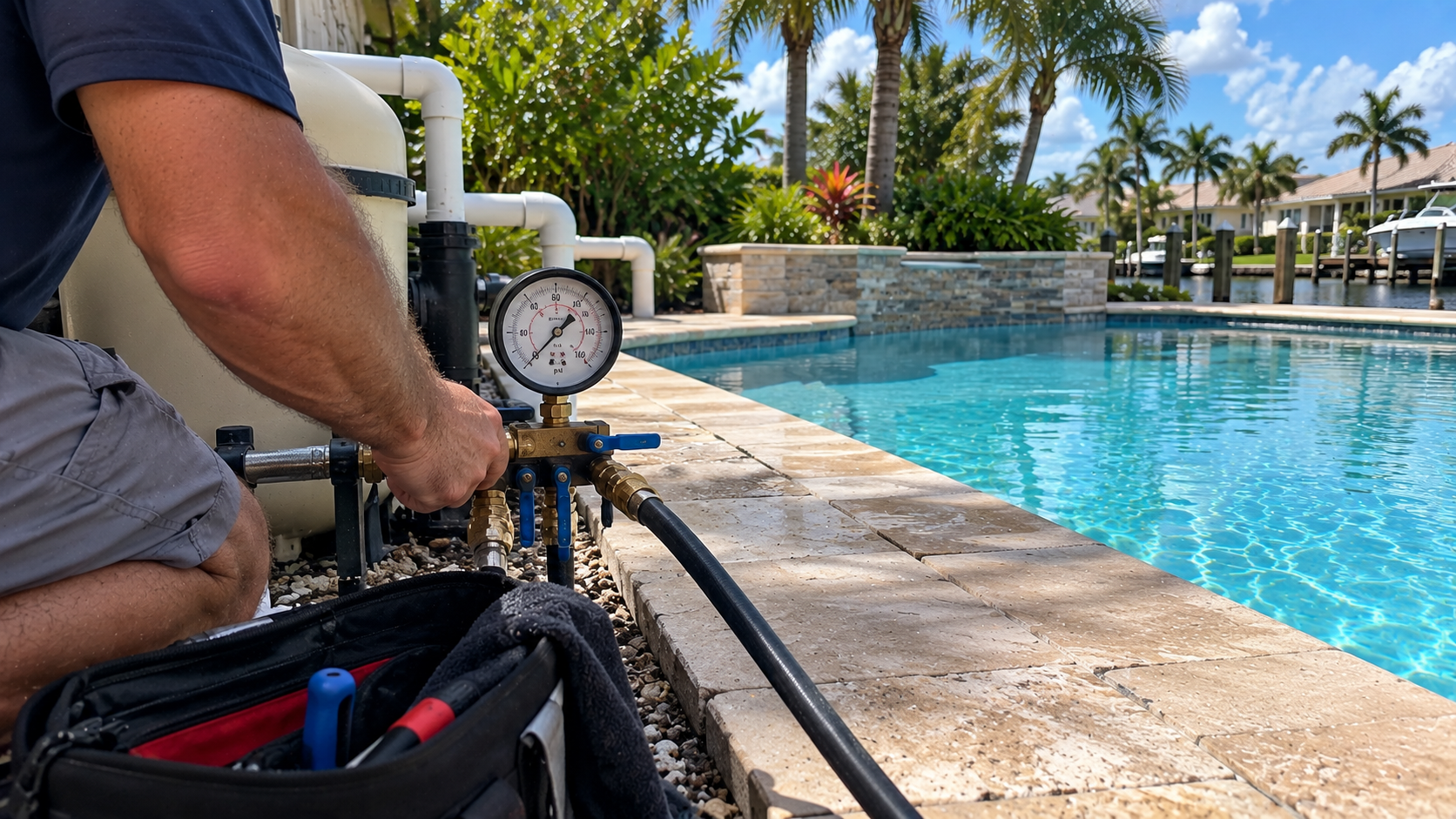
Pressure testing each plumbing line. Every plumbing line is isolated and pressurized individually. Return lines, suction lines, and the main drain are each tested as separate segments. A line that holds pressure under testing is intact. A line that loses pressure has a breach somewhere along its route. This step is what separates professional detection from visual inspection. You cannot find a failing underground return line by looking at a pool. You find it by isolating that line and watching the pressure gauge.
Dye testing at the shell. Skimmer throats, light niches, return fittings, main drain covers, and any visible cracks in the shell are all dye-tested. Leak detection dye released near a suspected penetration is drawn toward any active leak point, making the location visible. This step is particularly useful for structural cracks in West Palm Beach pools where salt-air corrosion has affected fittings at the shell wall.
No unnecessary digging. Blue Bubble Pools locates the exact source of a leak before recommending any excavation or repair work. Homeowners in West Palm Beach who have been told by other companies that they need to open up the deck to "see what is happening" without a proper pressure test first should be skeptical of that recommendation. You dig only where you know the problem is.
One of the advantages of working with Blue Bubble Pools is that the company handles both ongoing pool maintenance and leak detection. That combination matters for West Palm Beach homeowners in a specific way.
A technician who has been servicing your pool weekly knows its baseline. They know what your equipment sounds like when it is operating normally, what your water loss pattern has looked like historically, and when something has changed. That context is genuinely useful when a potential leak is developing.
At the same time, the leak detection work is handled with certified equipment and methodology, not as an informal observation added onto a routine service visit. When you call Blue Bubble Pools about a suspected leak in West Palm Beach, the response is a structured detection process with defined steps, not a visual inspection and a guess.
This is the combination that most West Palm Beach pool owners are looking for and that generic pool service companies typically cannot offer: someone who knows your pool and is also formally trained to find what is wrong with it.
Blue Bubble Pools handles pool leak repair in addition to detection. That matters because it keeps you from managing two separate companies and two separate schedules for a problem that is already costing you water and money.
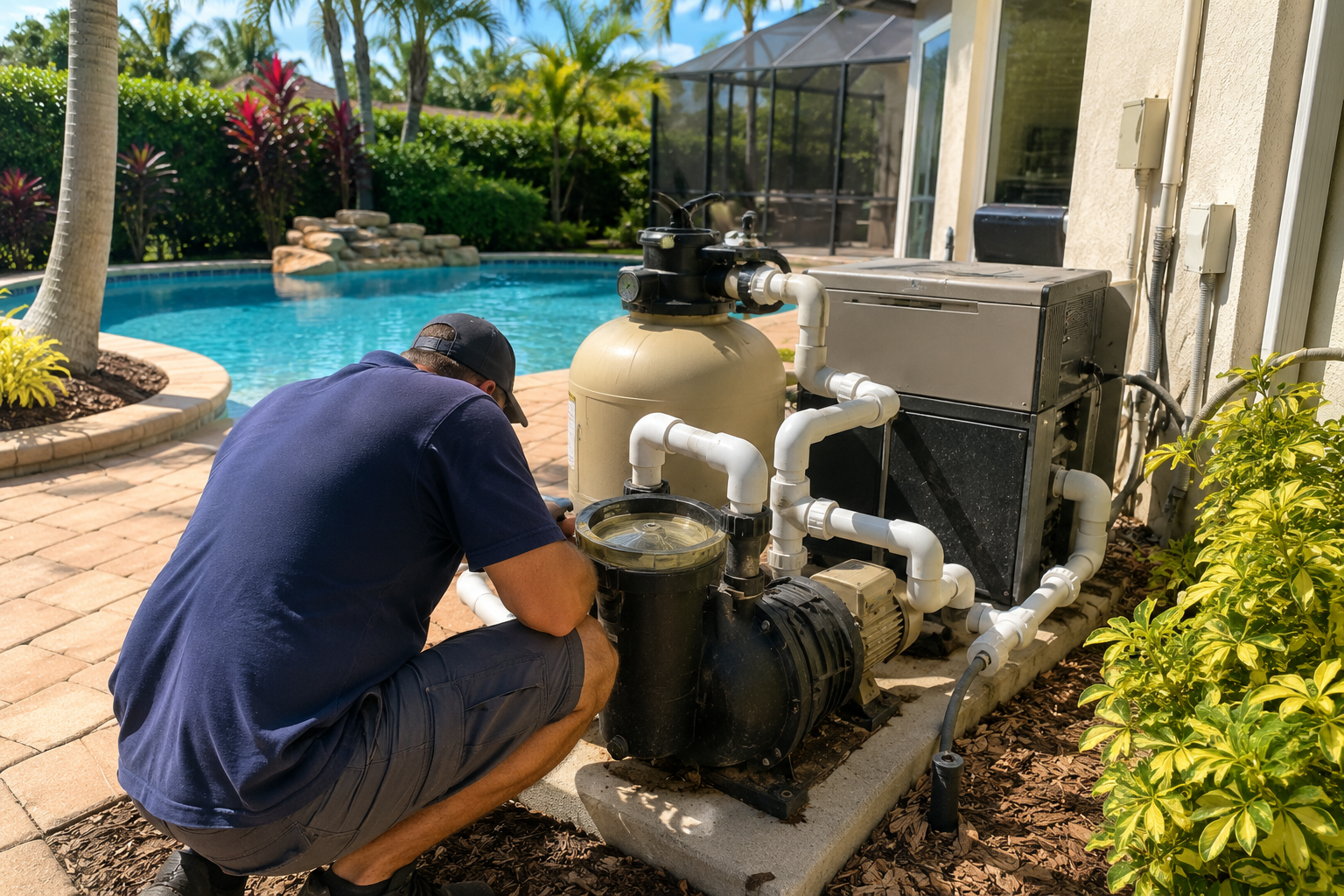
Common repairs in West Palm Beach include skimmer throat sealing or replacement, return line fitting repairs, light niche fitting replacement, and structural crack repair using epoxy or hydraulic cement appropriate to the crack type and location. Equipment pad leak repairs, including union fittings, valve connections, and filter tank connections, are also part of Blue Bubble's repair scope.
After a repair is complete, the pool is retested to confirm the water loss has stopped. You should not have to take anyone's word that the repair worked. A follow-up pressure test or observation period confirms it.
Ask directly whether the technician performing the detection is Leak Certified. A certified technician has completed formal training in pressure testing, acoustic detection, and dye testing methodology. Many general pool service companies offer leak detection without this certification, which means the process may be visual inspection rather than systematic testing. Blue Bubble Pools is Leak Certified, which is a specific credential rather than a general claim.
A quarter inch per day in peak South Florida summer is within the normal evaporation range. Half an inch per day consistently points to a leak. Run the bucket test to confirm before calling anyone. If the pool is dropping meaningfully more than the bucket over 24 hours, that difference is water escaping from a leak rather than evaporating from the surface.
Most residential pool leak inspections with Blue Bubble Pools take two to three hours from arrival to completion. Pressure testing the plumbing lines is typically the longest step. Pools with more complex plumbing configurations or multiple suspected leak sources may take longer. You will know what was found before the technician leaves.
Blue Bubble Pools serves West Palm Beach and surrounding Palm Beach County communities including Boca Raton, Delray Beach, Wellington, and Palm Beach Gardens. Call (617) 447-8722 to confirm availability for your specific address.
Yes. Underground plumbing leaks saturate the soil around and beneath the pool over time. In Palm Beach County's sandy soil, that water migrates and can erode the material supporting the pool deck, leading to settling or cracking that becomes a structural repair. Equipment pad leaks can damage electrical connections and accelerate equipment corrosion. The cost of a leak that runs for months is always higher than the cost of detecting it early.
Coverage depends on your specific policy. Florida homeowners insurance policies vary significantly in how they handle pool-related damage. Sudden and accidental losses are more commonly covered than gradual leaks. Blue Bubble Pools can provide documentation of what was found and what was repaired, which is useful when working with your insurer. Call your provider before assuming coverage applies or does not apply.
A pool leak in West Palm Beach does not stay the same size. It runs, it saturates, and it costs more every week you wait. Blue Bubble Pools & Leak Detection is based in West Palm Beach, Leak Certified, and has been keeping South Florida pools clean and leak-free for over 10 years.
Call (617) 447-8722 or contact us for a free estimate. Serving West Palm Beach, Boca Raton, Delray Beach, Wellington, and Palm Beach Gardens.