Pool Leak Detection in West Palm Beach: Why the Company You Call First Matters
September 11, 2026
Read more
Common pool pump, filter, and heater problems in West Palm Beach, what you can fix yourself and when to call a pro.
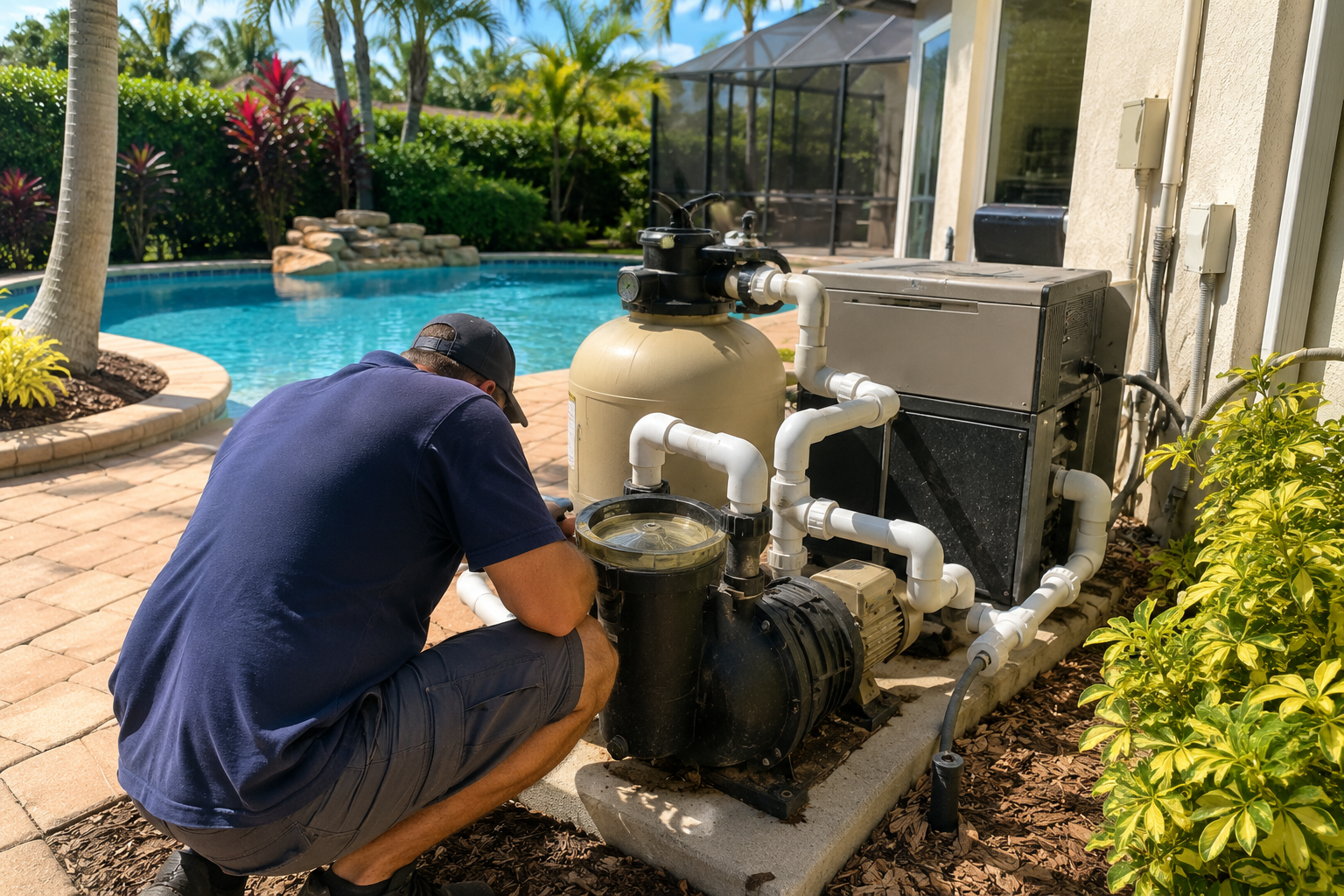
Your pump is groaning, your filter pressure is climbing, and you're not sure if it's a quick fix or the start of a bigger bill. Pool equipment repair in West Palm Beach picks up every year once the heat sets in and equipment that's been coasting all winter finally gets pushed hard. At Blue Bubbles Pools Leak Detection and Repairs, we see the same handful of problems on repeat, and knowing which ones you can watch and which ones need a technician can save you real money.
Salt air, humidity, and near-constant pool use take a toll on equipment here that pools in drier climates simply don't deal with. Motors run more hours per year in West Palm Beach than almost anywhere else in the country, since the swim season barely pauses.
Conditions that shorten equipment lifespan locally:
Because of this, equipment that might last 12 years elsewhere often needs attention closer to the 8 to 10 year mark here.
The pump runs longer than any other piece of equipment, so it tends to be the first thing to show wear.
Common pump symptoms and what they usually mean:
A grinding noise rarely fixes itself. If anything, it gets louder and eventually the motor seizes entirely, turning a $150 seal job into a full pump replacement.
If your pump is under five years old, a seal or capacitor repair almost always makes sense. However, once a pump crosses the eight to ten year mark, especially with corrosion visible on the housing, replacement tends to be the smarter long term move. Newer variable-speed pumps also cut electricity costs significantly compared to older single-speed models, which can offset the upgrade cost within a couple years.
Filters don't make noise when they're struggling, which is exactly why problems go unnoticed until the water turns cloudy.
Signs your filter needs service:
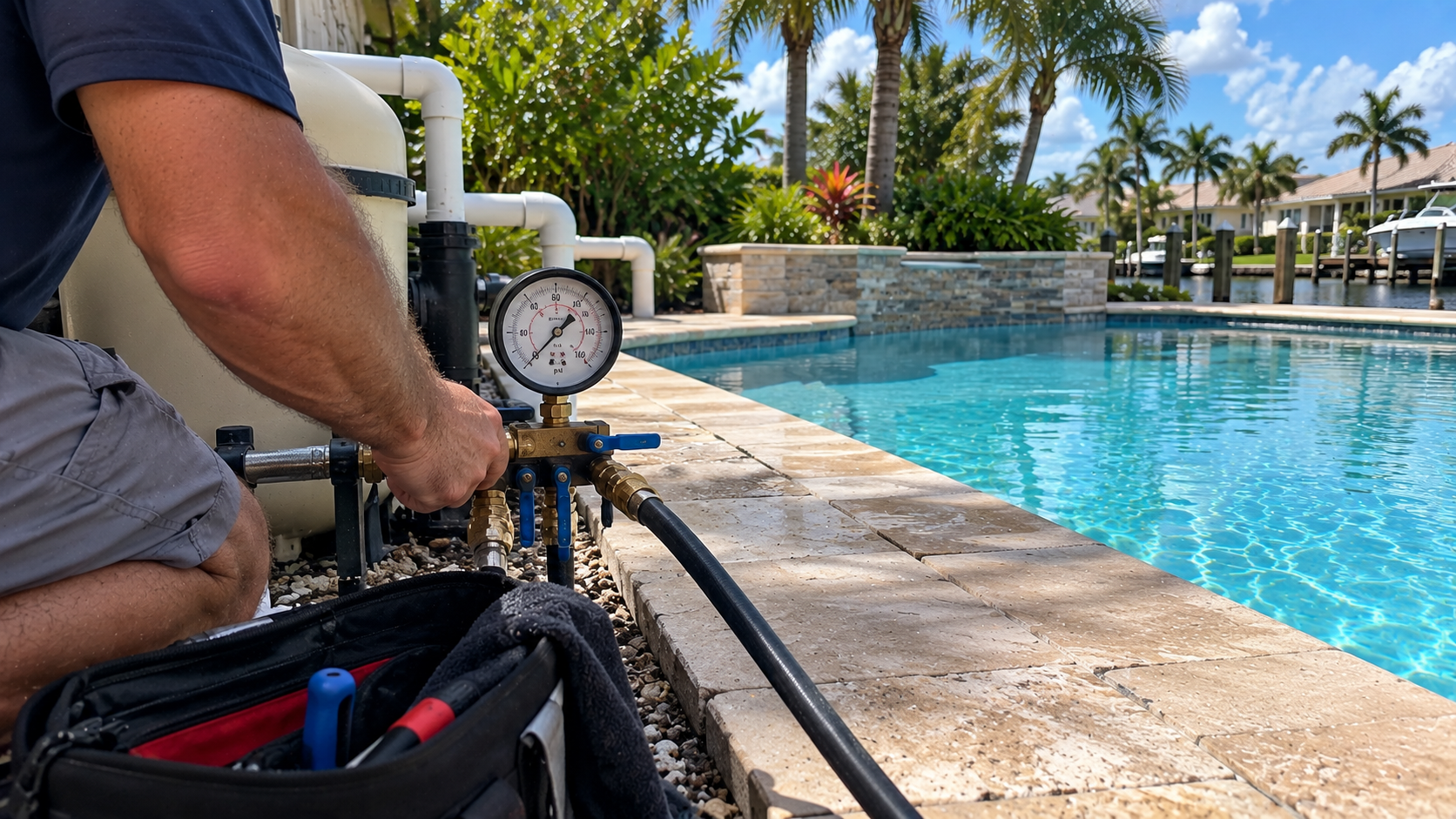
Cartridge filters need cleaning every four to six weeks during peak season here, more often if your yard has heavy tree cover. Sand filters should get backwashed once pressure climbs 8 to 10 PSI above its clean baseline reading.
A cracked filter tank or stuck multiport valve gets mistaken for a pump issue more than people expect. We've had homeowners convinced their pump was dying when the real culprit was a valve stuck in backwash position the whole time.
Heaters see less daily use than pumps but tend to have pricier repairs when something does go wrong, particularly with the heat exchanger.
What typically fails on a pool heater:
Here's a rule worth remembering: if a heater repair costs more than half of a new unit, replace it instead. Heat exchangers are one of the most expensive parts to swap, and once corrosion starts, it tends to spread rather than stay contained to one spot.
Homeowners often wait to see if a noise or slow leak resolves on its own. It rarely does. A pump seal that's just starting to weep water becomes a full seal failure within weeks, and a filter running a little sluggish can crack under pressure by midsummer.
We've walked into plenty of jobs where a $40 part solved what the homeowner expected to be a $1,000 repair. On the other hand, we've also seen people sink money into fixing a pump that was already near the end of its life, when a new unit would have paid for itself in energy savings within two seasons. Getting an honest diagnosis early is what actually saves money, not avoiding the call.
Most pump repairs fall between $150 and $400 depending on the part, with seal and capacitor jobs on the lower end. Full motor replacement runs higher, and we always quote before starting any work.
Cartridge filters typically need cleaning every four to six weeks during peak season, and sand filters need backwashing whenever pressure rises 8 to 10 PSI above the clean baseline.
The usual culprits are a dirty heat exchanger, a failing thermostat, or a clogged filter limiting water flow into the heater. We check all three during a service call since symptoms overlap.
Cleaning a cartridge filter or clearing debris from a strainer basket is fine for most homeowners. Anything touching the pump motor, gas lines, or electrical connections should go to a licensed technician.
With salt air and near year round use, most pumps here last 8 to 10 years, somewhat shorter than the 10 to 12 year average in drier inland climates.
We understand equipment failures don't wait for a convenient day, especially during peak summer heat. Contact us directly to check same-day or next-day availability.
Whether it's a pump losing pressure, a filter that can't keep up, or a heater that won't hold temperature, Blue Bubbles Pools Leak Detection and Repairs has seen it in West Palm Beach backyards before. Book a consultation today and we'll diagnose the real issue before recommending a fix.