Pool Leak Detection in West Palm Beach: Why the Company You Call First Matters
September 11, 2026
Read more
Waking up to a swampy pool? Here's how West Palm Beach homeowners can bring a green pool back to swimmable fast.
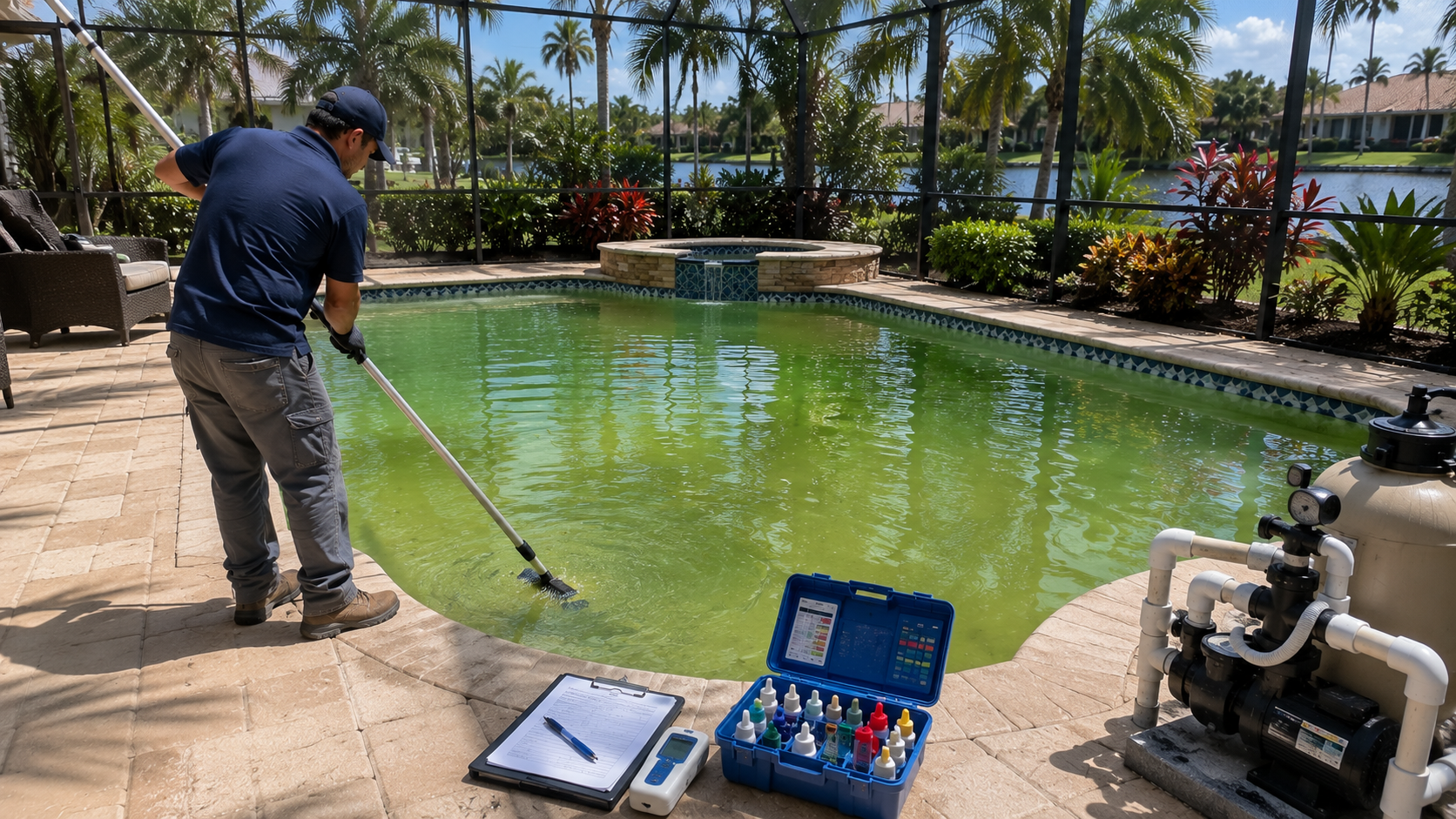
You went out of town for two weeks, and your pool turned into a swamp. Green pool recovery is one of the most urgent calls we get at Blue Bubble Pools & Leak Detection. West Palm Beach heat makes the problem move faster than most homeowners expect. Here is what actually happens once a pool crosses that line, and what it takes to bring it back.
Florida heat and humidity create ideal conditions for algae growth. A pool with low chlorine can shift from clear to green within just a few days. Peak summer months make this happen even faster.
Once algae takes hold, chlorine alone often cannot catch up fast enough. The algae multiplies faster than a standard dose can kill it. That is why a neglected pool needs a real recovery process, not just extra shock treatment poured in and hoped for the best.
A few common triggers lead to green pool situations, and most are more preventable than homeowners realize. Vacations without proper chemical maintenance top the list. Even a week of neglect can be enough in summer heat.
Equipment failure is another major cause. A broken pump or a clogged filter stops water circulation. Stagnant water turns green fast, even if chemicals were recently added. Heavy rain events also dilute chlorine levels quickly. That creates an opening for algae to take over within days.
Recovering a green pool is not a single treatment, no matter what a quick internet search might suggest. It is a multi step process that has to happen in the right order.
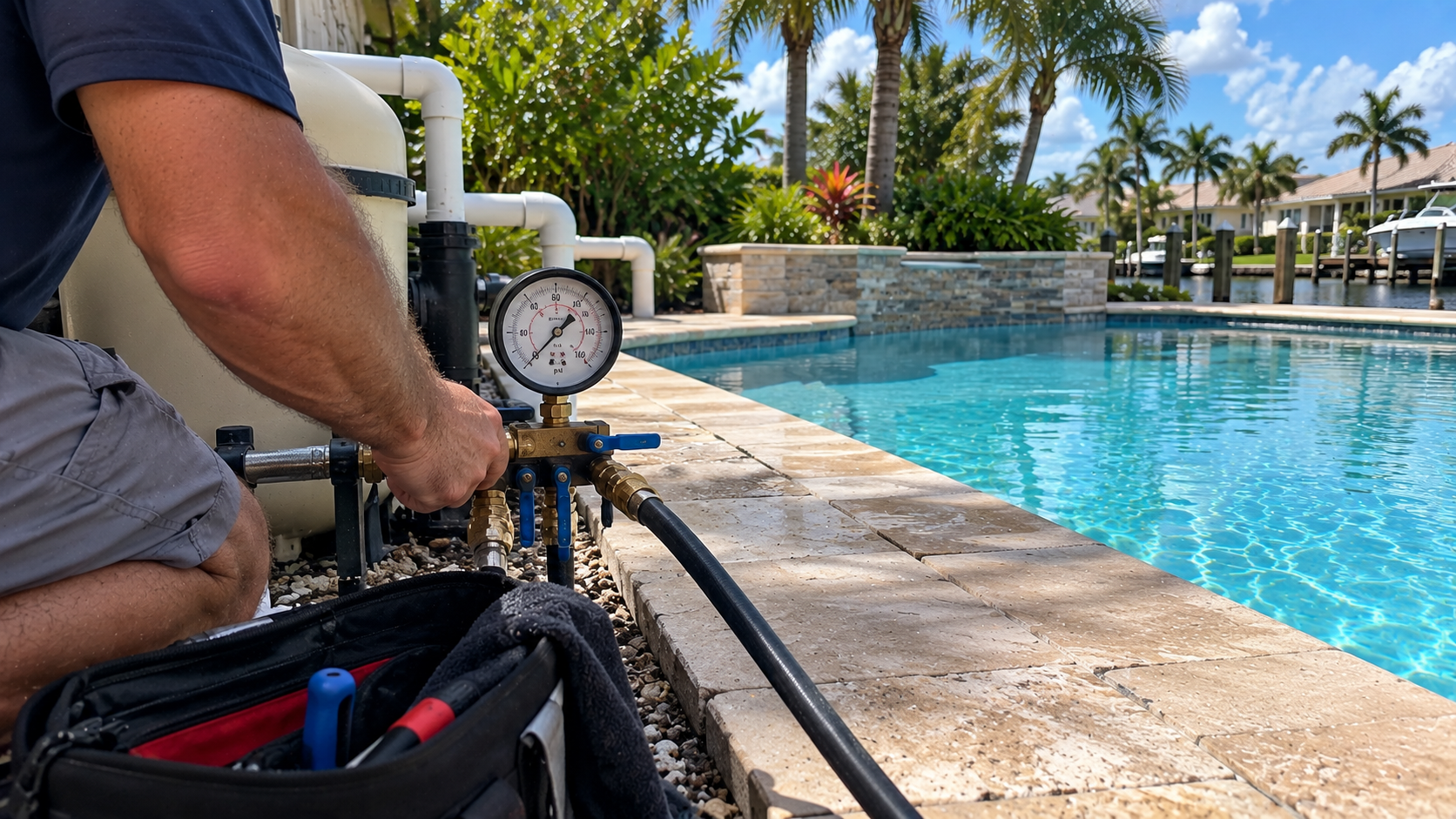
Before any chemicals go in, we test the water. This tells us exactly what we are actually dealing with. pH, alkalinity, and chlorine demand all get measured. Dumping chemicals into unbalanced water often wastes product and delays results.
The pool gets brushed thoroughly first. This loosens algae from surfaces before treatment even begins. That step matters more than most homeowners realize, since algae clinging to walls and steps can reseed the water even after a strong chemical treatment.
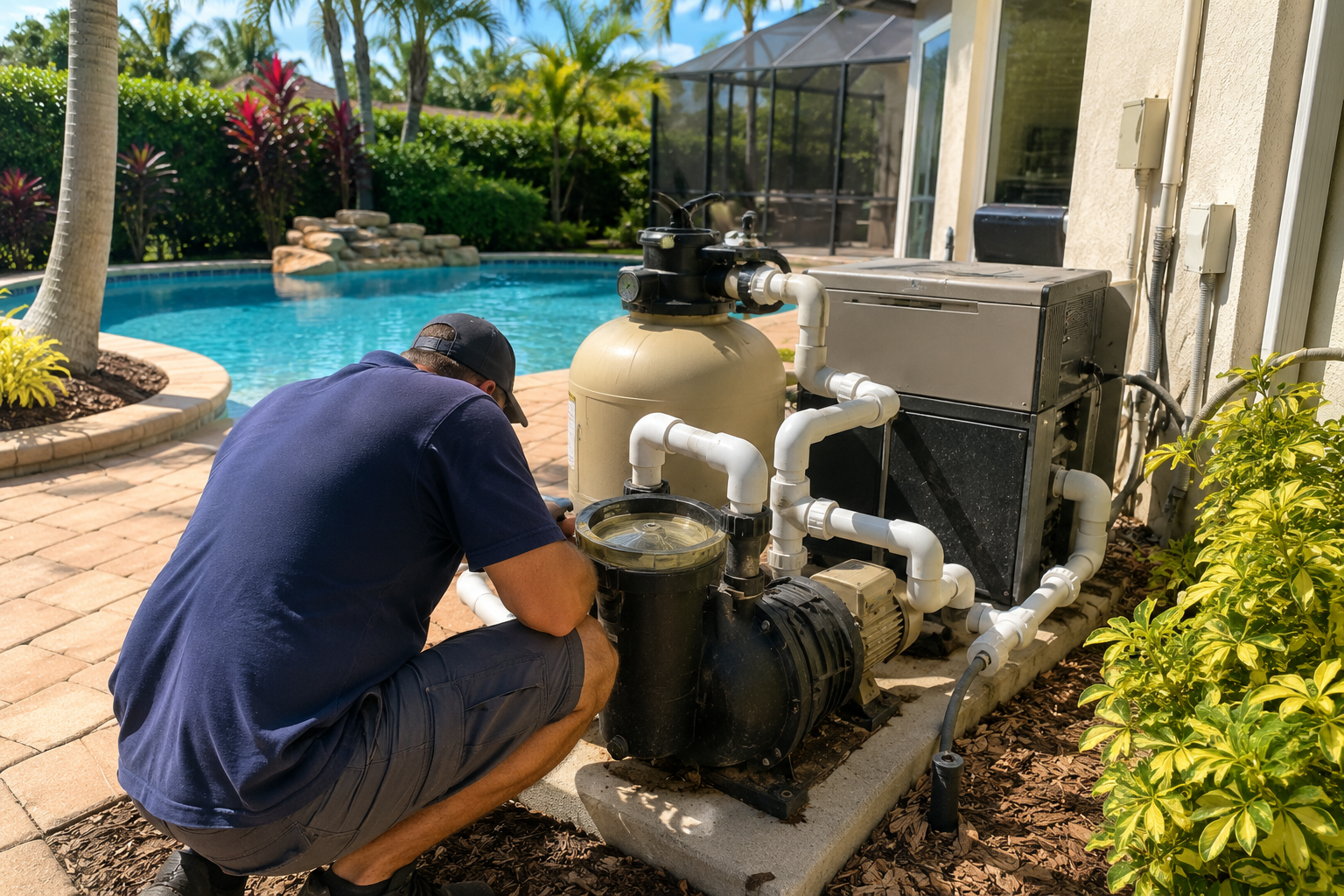
We also inspect the filter and pump during this stage, since equipment plays a role too. A recovery treatment only works if the filtration system can keep up. It needs to actually clear dead algae out of the water afterward.
Once the pool is brushed and the equipment confirmed working, we move to shock treatment. The dose gets calculated based on the actual chlorine demand we measured. This is not a guess. Real numbers from testing drive every decision here.
Using the correct dose matters as much as using enough of it. Overdosing wastes money and can create its own chemical imbalance. Underdosing lets the algae regroup within days instead.
After shock treatment, the pool needs continuous filtration. This clears dead algae and debris from the water over time. That phase can take anywhere from 24 hours to several days. How severe the situation was determines the timeline.
A clarifier or flocculant sometimes speeds up this stage. It helps fine particles clump together for easier filtration. Not every pool needs this step. Severely green pools often benefit from it, though.
Mild cases, caught within the first few days of turning green, often clear within 24 to 48 hours. Proper treatment makes the difference. Severe cases, where a pool has been green for a week or more, take longer. Full clarity can take three to five days.
Patience during this process matters. A pool can look significantly improved after the first day. It still needs continued filtration and follow up testing before it is genuinely safe and balanced for swimming.
Costs vary based on pool size and how severe the situation is. A mild case caught early costs less. On the other end, a pool neglected for weeks and requiring multiple treatment rounds costs considerably more.
Equipment repairs add to the total cost too, if a broken pump or filter caused the problem in the first place. Addressing the equipment issue matters just as much as treating the water. Skipping it often means the pool turns green again shortly after recovery.
Panicking and dumping excessive chlorine into a green pool is one of the most common mistakes we see. This can actually make water testing harder afterward. It does not speed up recovery the way people expect, either.
Another mistake is assuming the pool is fully recovered once the water looks clear. Clear water and balanced water are not always the same thing. A pool can look clean while chemical levels are still unstable. Professional follow up testing matters even after visible improvement, for exactly this reason.
A few habits reduce the risk of this happening again. Schedule weekly maintenance if you travel frequently. This keeps chemical levels from drifting far enough to create an opening for algae.
Address equipment issues quickly rather than waiting. A failing pump or filter is often the real root cause behind a green pool, not just a chemical lapse. Testing water regularly, even during weeks when the pool looks fine, catches small imbalances early. That prevents a full blown recovery situation later.
The longer a pool stays green, the more work it takes to fix. Algae that has had a week to establish itself requires more aggressive treatment than algae caught within the first day or two.
Delaying the call almost always costs more in the end. Extended neglect can also stain surfaces, clog equipment further, and require additional treatment rounds that a quicker response would have avoided entirely. If your pool has just started turning, acting fast keeps the job smaller and the cost lower.
Mild cases often clear within 24 to 48 hours with proper treatment. Severe cases where a pool has been green for a week or more can take three to five days for full clarity and chemical balance.
A single dose of chlorine before an extended absence often is not enough to last through hot West Palm Beach weather. Heat accelerates chlorine breakdown, and without ongoing maintenance, algae can take hold within days even after an initial treatment.
It is possible for mild cases, but severe green pool situations usually require calculated dosing based on actual water testing, not guesswork. Professional recovery also includes equipment checks that most homeowners are not equipped to properly assess themselves.
It can. Algae and imbalanced water chemistry put extra strain on pumps and filters, and a clogged filtration system can worsen during a green pool situation. Checking equipment during recovery helps catch problems before they become bigger repairs.
Costs vary based on pool size and severity. Mild cases caught early cost less than pools requiring multiple treatment rounds or equipment repairs. We provide a clear estimate after assessing your specific situation.
No, not until testing confirms the water is properly balanced and clear. Even a pool that looks visibly clean may still have chemical levels that are unsafe for swimming until the full recovery process is complete.
If your pool has turned into a green mess, do not panic and do not guess. Call us at (617) 447-8722 or email bluebubblesleaks@gmail.com. We proudly serve West Palm Beach, Boca Raton, and the surrounding areas.